

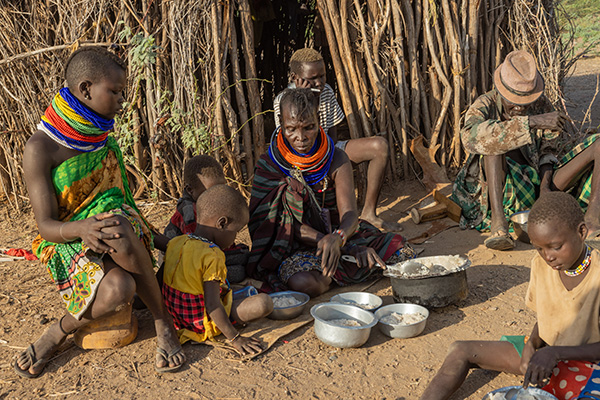
I was talking to a friend of mine who works in Turkana. When he first got the offer to come and work here, he was worried. Not only because of the harsh weather, but also because of the people. He had heard stories. He had formed his own picture of Turkana people, and it was not a good one.
He told me he knew he could survive the heat and the dust. But he was not sure he would survive even one day with what he thought would be hostility from the people.
Now he has been here for almost ten years. And every time we talk, he tells me how overwhelmed he is by the hospitality of Turkana people. One day he told me, “Woman, your people are straightforward, too hospitable. Generally, your people are good.”
I was not surprised.
I have always known my people are good. Even our pastoral way of life shows who we are.
In the past, when the rainy seasons were long, when there was abundance, when there was plenty of livestock, strangers would pass by our homesteads. Most of them were herders looking for lost camels, cattle, or donkeys, or sometimes men coming to ask for a woman’s hand in marriage, potential in-laws. When a stranger arrived, the first thing they were given was milk and water. That was our way of greeting. You settle them first. You allow them to rest. You don’t start with questions. Only after they are comfortable do you ask where they are headed.
Many times, they were just looking for a place to spend the night before continuing their search at dawn if they were headers.
And this is why I always say hospitality is not something Turkana people learned. It is who we are. It is how we were born.
There is a story about a young girl from the Jie community in Uganda. They say she lost one of her father’s bulls while herding. As she searched for it, she survived on water and wild fruits. During her search, she came across a hill with plenty of wild fruits and decided to settle there. That hill later became known as Moru Anayece , Nayece’s hill. The story does not tell us whether she ever found the lost bull.
One day, two stray bulls entered her homestead. The herders followed the footprints of the bulls, and that is how they found Nayece. She did not chase them away. She did not fear them. She welcomed them.
She shared what she had with them, water, wild fruits, and the pasture around her hill.
The herders from the Jie people were impressed by the abundance of pasture and food. They went back home and returned with young people and youthful animals, just like pastoralists still do today during drought seasons, moving with strong animals to better grazing land even for months.
But when they came back and settled with Nayece at Moru Anayece, they never returned home. Even when elders came to ask them to go back, they refused. They had found a place that welcomed them. They had found abundance. They had found belonging.
They changed their name to Ngiturkana that’s the Turkana people.
And that is how it is believed the Turkana tribe was born.
The elders who remained among the Jie were angry and cursed the land. People say that is why Turkana is dry.
It’s a myth of Origin.
But I always think even if the land is dry, the hearts of the people are not.
Because from the very beginning, our story started with welcoming strangers.
And up to today, that has not changed.
Leave A Comment